
Home »
THEMATIC AREA
Working in health in humanitarian aid and development: career guidance
A large number of students and professionals in the health sector consider at some point in their lives the possibility of working in humanitarian action and international cooperation, but they often lack adequate information about humanitarian careers. What opportunities exist and how to prepare for them?
3
areas
11
pages
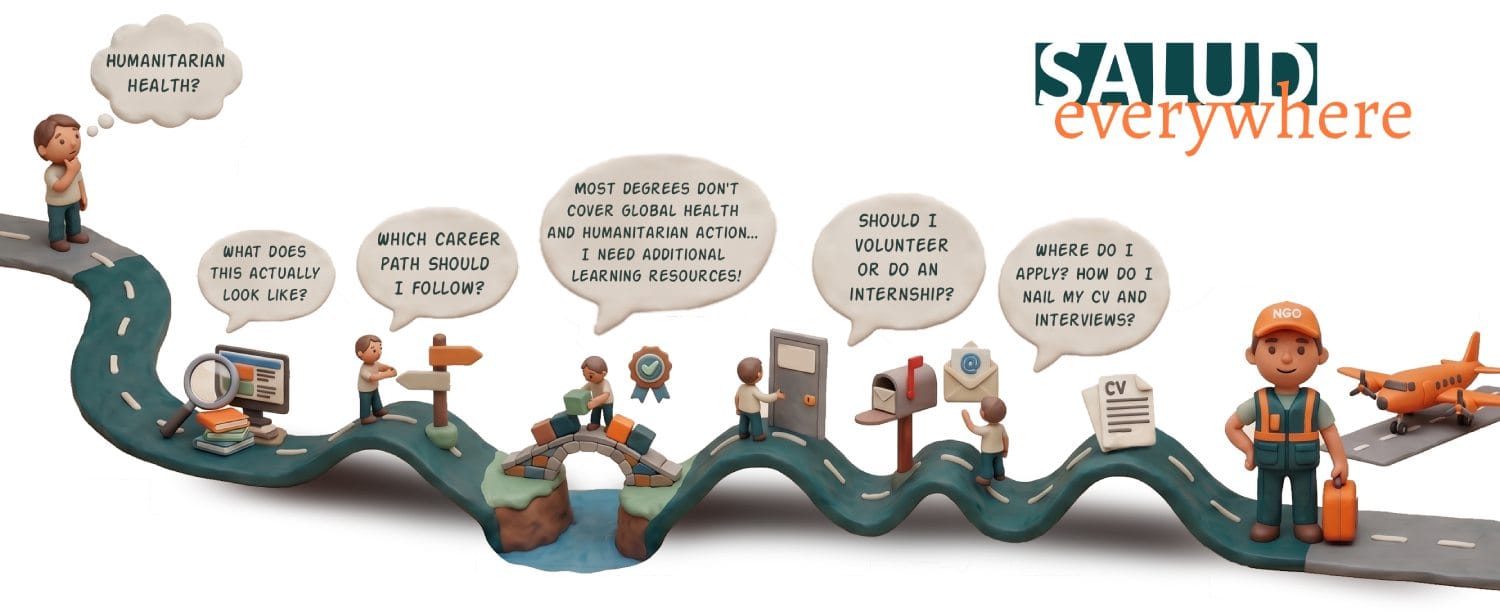
Have you ever thought about working in international health cooperation?
Since 2025, the global health and humanitarian financing crisis has reduced job opportunities in the sector, but positions in humanitarian action and development cooperation in health are still posted every day. Landing one is difficult, but far from impossible.
Where are you in this journey? You might be exploring whether this career fits your profile or motivations. You might have already identified the kind of role you want and be building your experience and training. Or you might be actively job-hunting and want to maximise your chances. This section covers all three stages.
- Not all humanitarian organisations are the same. Their mandate, origin and funding model shape their internal culture, bureaucracy and the day-to-day experience of those who work for them.
- The image of a doctor treating patients in a refugee camp is real, but represents a small fraction of sector employment. Most positions involve coordination, programme management or technical advisory roles, each with very different profiles.
- Like any career, humanitarian work has its rewards and its costs. Hearing about both from people already working in the sector is essential before taking the leap.
3 pages
→ Read more.
- Humanitarian organisations select staff based on specific professional competency frameworks. Knowing them is essential.
- A public health master's is the most common qualification in the sector, but global health or humanitarian action programmes go much deeper into the topics that actually matter.
- Complementing your core training with additional courses and learning tied to specific roles and profiles is virtually unavoidable.
- Volunteering and NGO internships are often the real first door into the sector, but not all options are as good as they seem.
4 pages
→ Read more.
- Platforms like ReliefWeb or Impactpool list many open positions. Here you'll find a free tool to quickly identify vacancies that match your profile and interests. Understanding what those roles require is half the battle.
- Your CV and motivation letter must survive a ten-second first filter and demonstrate real competencies. The motivation letter is your chance to tell the story your CV can't.
- Selection processes have several stages. Knowing them well is the foundation for thorough preparation and success.
4 pages
→ Read more.