
THEMATIC AREA
Foundations of health in international cooperation
This section brings together the conceptual foundations of health, public health, global health, and humanitarian health, and how they are operationalized in international cooperation, along with some of their key pillars, such as primary health care, universal health coverage, and the social determinants of health. You will find AI-assisted reflection exercises on each page and a case study at the end.
6
pages
What is the difference between public health, global health, and humanitarian health?
"Health" is possibly the most repeated word on Salud Everywhere. Yet it is a complex word that admits many qualifiers for distinct fields of action. Public health, for instance, organizes the collective response to meet a population's needs. Global health, however, transcends borders while inheriting deep political and economic inequalities. In emergencies and conflicts, we also speak of humanitarian health, bringing a necessary perspective when needs intensify and systems collapse.
Understanding how these perspectives differ and relate to one another, often coexisting in the same setting, is fundamental for any health cooperation professional, from humanitarian action to development. Moreover, grasping these distinctions will guide us toward concrete operational decisions about how to intervene.

- Health is much more than the mere absence of disease. It is physical, mental and social well-being, and a fundamental human right, recognized since the WHO Constitution of 1946.
- Understanding health as a public good helps us grasp that what affects one person has repercussions for their community, and vice versa.
- Public health is organized around essential functions: surveillance, prevention, equitable access to services, and policy development with social participation.
- Its governance requires leadership from authorities (duty-bearers), support from organizations (responsibility-holders), and participation from the population (rights-holders).
→ Read more.

- The tropical medicine of the 19th and 20th centuries had a marked colonial background. International health broadened the perspective, but still inherited North-South inequality.
- Global health emerged in the early 21st century, driven by HIV/AIDS, the MDGs, and new non-state actors. Since 2025 it has faced major uncertainties, following the withdrawal of the United States from the WHO.
- Humanitarian health aims to alleviate suffering and save lives in emergencies, working to minimum standards and with a growing humanitarian-development-peace nexus vision.
- As a humanitarian sector, health has a strong specialized technical component and a cross-cutting relationship with all other sectors.
6-minute read + 1 AI-assisted reflection question
→ Read more.
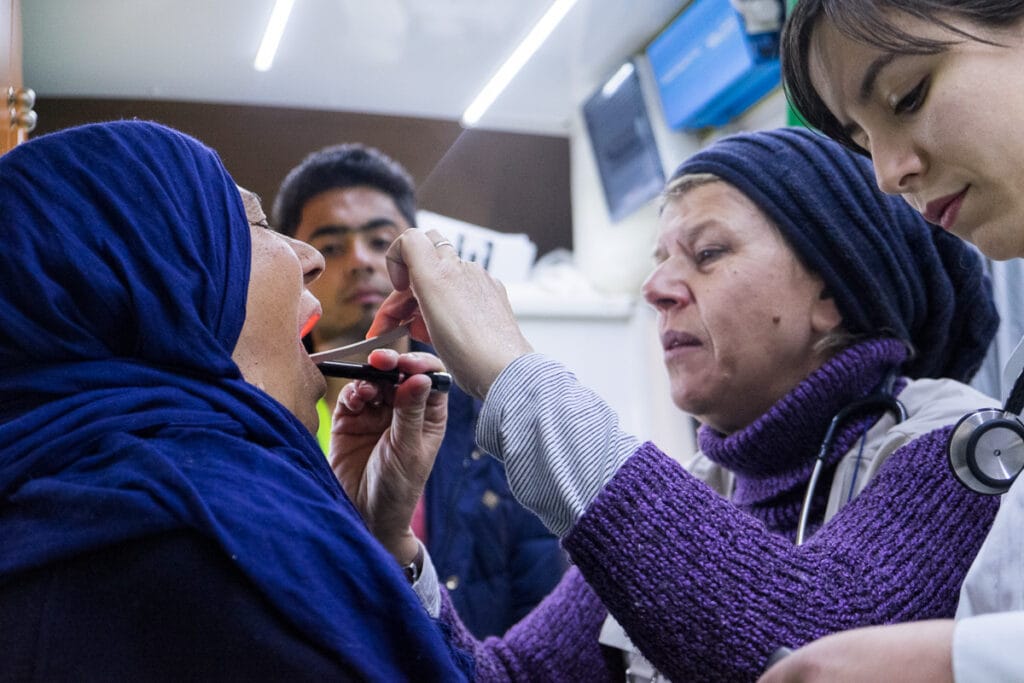
- When the health system does not exist, cannot reach the population, or lacks capacity, humanitarian actors take on the direct provision of services, on a temporary and coordinated basis.
- Support to essential services seeks to restore minimum functional capacity and prepare the system for future shocks.
- Health system strengthening is a medium- and long-term approach aimed at sustainable improvements.
- In practice, these three approaches coexist: a single organization may combine them, or collaborate with others specialized in each one.
7-minute read
→ Read more.
Goals and principles of international health cooperation
Universal health coverage, primary health care, and the social determinants of health are critically important concepts in international cooperation. Why? Because they are the major normative and political frameworks that guide how to protect the health of the entire population. In a sense, they map out essential pathways, principles, and goals for making the right to health a reality even in the most extreme contexts.
This block examines each of them, the most compelling proposals for their application, the tensions that arise when pursuing them in interventions and public policies, and the pitfalls that too often lead us astray.
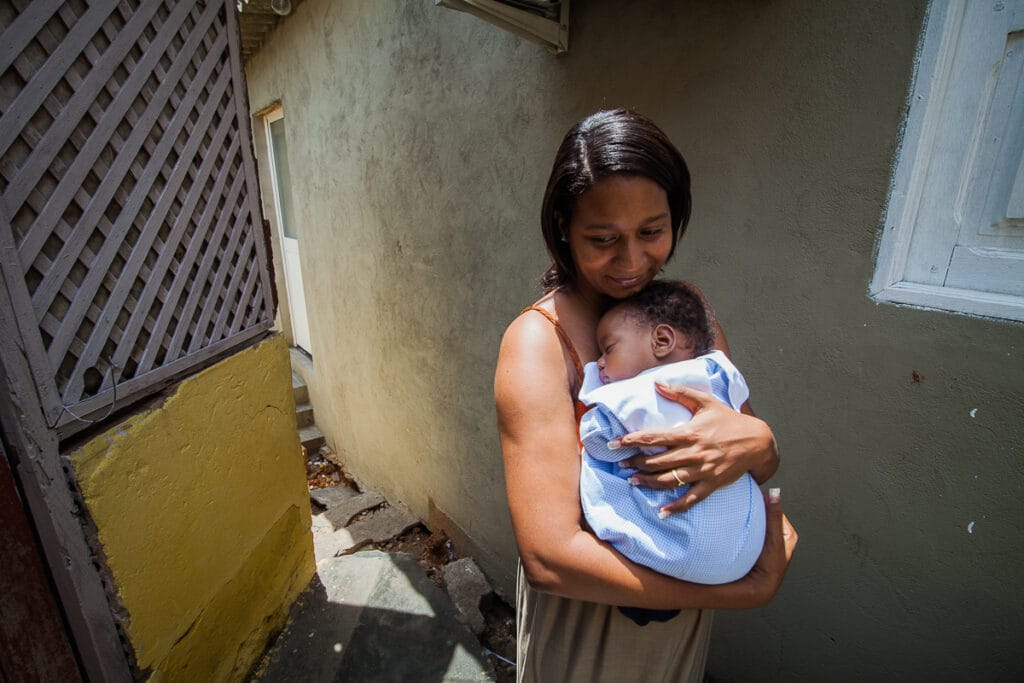
- Universal health coverage has three dimensions: population covered, services included, and the proportion of costs covered by pooled funds, without out-of-pocket payments that impoverish people.
- The global service coverage index advanced from 54% in 2000 to 71% in 2023, but progress has stalled: today 4.6 billion people lack full access to essential health services.
- Systems with a strong for-profit private sector presence are less equitable, less efficient, and harder to govern toward public health goals.
- Limiting benefit packages, fragmenting insurance schemes, or relying on voluntary contributions are shortcut-laden traps that undermine equity and the right to health.
12-minute read + 1 AI-assisted reflection question
→ Read more.

- The Declaration of Alma-Ata (1978) defined primary health care as the central core of any health system, not merely as a gateway or a package of basic services.
- The structural adjustment policies of the 1980s reduced it to its bare minimum, stripping it of its social, community-based, and social justice foundations.
- Universal health coverage has displaced primary health care in the global discourse, opening the door to financing approaches that ignore community participation and the social determinants of health.
- Community health workers (the majority of whom are women) continue to demonstrate their transformative potential despite institutional mistreatment and inadequate recognition.
6-minute read + 1 AI-assisted reflection question
→ Read more.

- Socioeconomic status, working conditions, education, housing, and social support networks have a greater impact on health than healthcare itself.
- The report of the WHO Commission on Social Determinants of Health (2008) concluded that social injustice is killing people on a large scale. More than fifteen years later, economic inequality has increased and the major social determinants remain inadequately addressed in global health policies.
- The commercial determinants of health are shaped by industries that influence consumption habits and public policies by exploiting regulatory weaknesses.
4-minute read + 1 AI-assisted reflection question
→ Read more.
Case study: a first look at health interventions in crisis contexts
Have you read all the pages? Well, I propose an exercise for you to put your knowledge into practice. It consists of a case study with a series of questions. Once you've answered them, press the button for NotebookLM to open. Paste the content of your clipboard there (Ctrl+V on Windows, Command+V on Mac) to get feedback.
🧠 Case study
Country X has been embroiled in internal armed conflict for eight months. More than 400,000 people have been displaced: half in peri-urban settlements, the other half in hard-to-reach rural areas. The health system, already weak before the crisis, has lost much of its operational capacity. Health workers have fled en masse. The community health worker network, which had sustained rural coverage, has been left without supervision or support. There is overcrowding, falling vaccination coverage, risk of cholera and measles outbreaks, and rising childhood malnutrition.
Your organization has just received 18 months of funding to launch a health intervention.
1. Which essential public health functions are likely most compromised, and which would you consider prioritizing to mitigate the main risks to the population?
2. Given the context and the 18-month timeframe, which approach would you prioritize — direct service delivery, support to essential services, or health system strengthening — or what combination of approaches, and why?
3. Resources are limited. Which levels of care would you focus support on to ensure equitable access and good coverage of essential health services? What role can community health workers play in this context?
4. Which social determinants of health have likely been most affected by this crisis? Which other humanitarian sectors would you coordinate with to address them?
- 1Think and write your answer.
- 2Click on «Copy and open».
- 3Paste to receive feedback.
📚 This is the NotebookLM of this learning pathway. It uses only carefully selected references. | What is NotebookLM?
These health foundations cut across all health issues in development cooperation and humanitarian action. The way health and public health are understood shapes how health systems are analyzed and sustained in humanitarian contexts, how the humanitarian health sector articulates with others such as nutrition or food security, or decisions on the prioritization of sexual and reproductive health in emergencies. Equally, in the tension between global health and humanitarian health, complex decisions must sometimes be made about the importance of addressing global health security versus the more immediate needs expressed by the local population in a humanitarian crisis.