
Neglected tropical diseases: types, targets and prevention strategies
- Page updated onOctober 10, 2026
Neglected tropical diseases (NTDs) are a group of 21 conditions affecting more than a billion people in the poorest regions of Africa, Asia and Latin America. Also known as forgotten diseases and diseases of poverty, NTDs are both a cause and a consequence of it, and have historically been pushed to the margins of the global health agenda despite the suffering and disability they cause. Today, many of the gains made against these infectious diseases are threatened by the consequences of conflict and humanitarian crises in endemic countries.
Table of contents:
What are neglected tropical diseases? Which ones are they?
Neglected tropical diseases have been both a cause and a consequence of poverty for years
Neglected tropical diseases (NTDs) are a group of infections that are highly prevalent in tropical regions, where for centuries they have affected the poorest people on the planet (Hotez et al., 2007).
In 2021, these diseases were estimated to affect around 1.17 billion people, with a global prevalence of 14.8%, assuming a low co-infection scenario. Although the figure has been falling steadily since 1990, this group of conditions is still responsible for some 119,000 deaths a year and means that around 1.495 billion people require preventive interventions each year (WHO, 2025d).
These diseases are strongly associated with the intergenerational cycles of poverty, being at once a cause and a consequence of it. On the one hand, they occur mainly in rural areas and poor urban districts of low-income countries in sub-Saharan Africa, Asia and Latin America. On the other, they produce poverty by causing disability and long-lasting sequelae, leading to stunted growth in children, having adverse effects on pregnancy and reducing the productive capacity of those affected and their communities, thereby contributing to their countries' socioeconomic decline (Hotez et al., 2007).
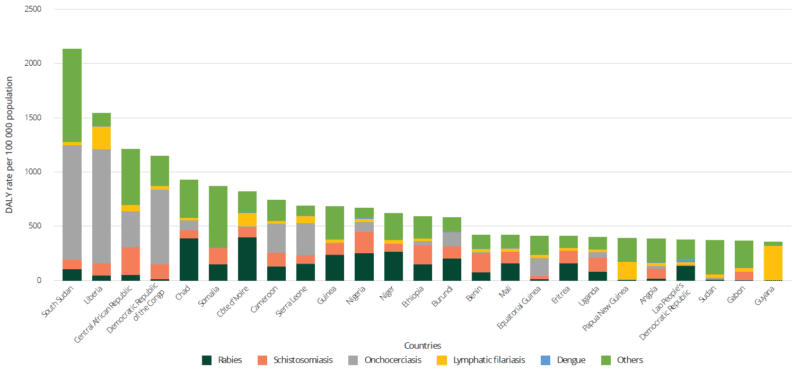
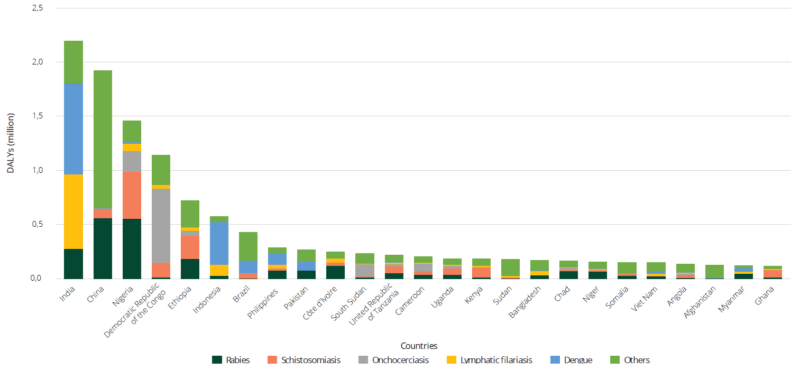
These diseases account for a large share of the global burden of disease
This group of conditions is called "neglected" because it has generally been overlooked on the global health agenda. NTDs were relegated to the background in the Millennium Development Goals (Smith & Taylor, 2013), and there have traditionally been few commercial incentives to develop new medical products for their prevention and treatment (Molyneux et al., 2005).
Although from 2003 onwards the movement to highlight the importance of neglected tropical diseases gained visibility, attracting investment and major donations from pharmaceutical companies and securing broad institutional backing (Molyneux et al., 2021), the COVID-19 pandemic of 2020 led to a resurgence of many of these infections. Years later, they remain highly prevalent in endemic countries, reflecting the gaps in access to quality health services and the disparities in progress towards universal health coverage (WHO, 2021b).
WHO currently recognises 21 neglected tropical diseases and disease groups
Since 2023, the World Health Organization (WHO) and its Department of Control of Neglected Tropical Diseases have included 21 infections in this group, caused by a wide variety of viruses, bacteria, parasites, fungi and toxins (WHO, 2025f).
The list is updated periodically by WHO's Strategic and Technical Advisory Group for Neglected Tropical Diseases (STAG-NTD). This group assesses requests from member states. Since 2016, it has applied four criteria to determine what can be considered a neglected tropical disease (WHO, 2016):
- They are diseases that disproportionately affect populations living in poverty. They warrant a global response because of the stigma, discrimination, illness and death they cause.
- They mainly affect populations living in tropical and subtropical areas.
- They can be addressed through public health strategies for their control, elimination or eradication.
- They are relatively neglected by research, with resources allocated to developing new diagnostics and treatments that are not proportionate to the scale of the problem.
Since these criteria were established, the list has grown from 17 to 21 neglected tropical diseases. The most recent addition to the group, noma or gangrenous stomatitis, was added in 2023 (WHO, 2023i).
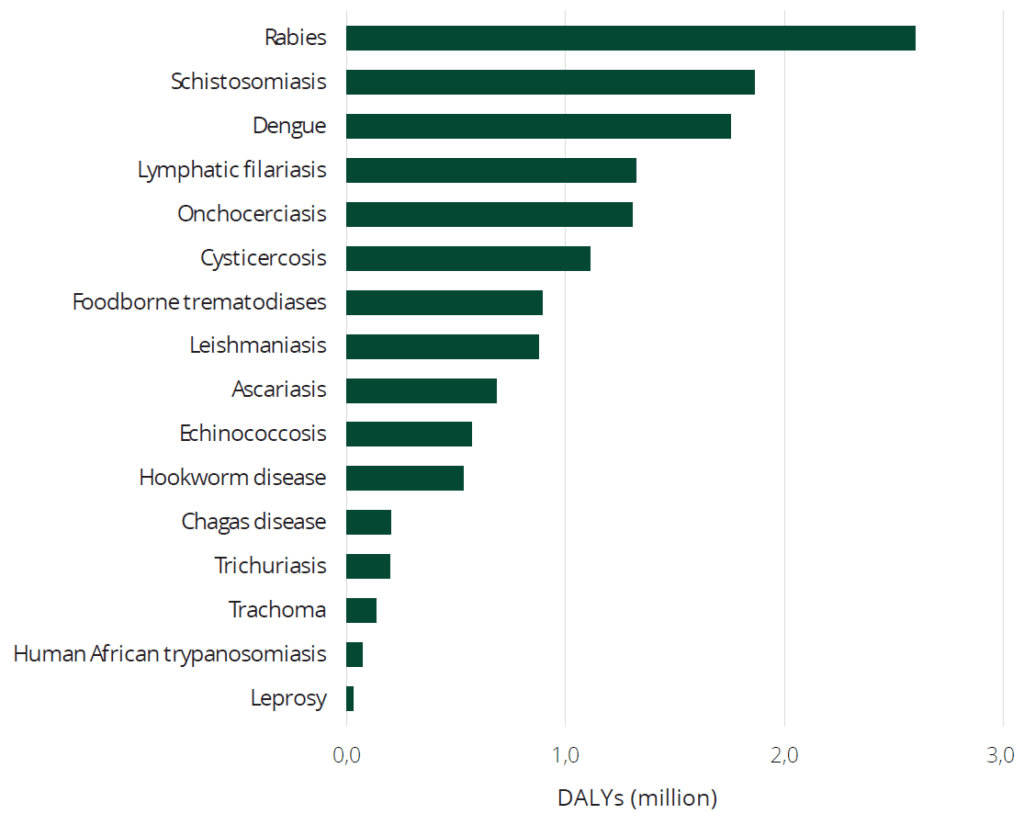
What are the 21 neglected tropical diseases?
Since 2023, WHO has included the following 21 conditions or groups of conditions in its list of neglected tropical diseases:
- Buruli ulcer. When the bacterium Mycobacterium ulcerans passes from the environment to humans, by a mechanism that is still not well understood, it secretes a toxin that damages the skin and sometimes the bone, causing permanent disfigurement and long-term disability. It affects 33 countries, although the number of cases reported annually has been falling, down to 1,370 in 2021. Clinical diagnosis requires training and differential diagnosis against other ulcers, while laboratory diagnosis by PCR currently takes too long to guide treatment properly, which requires a combination of antibiotics over several weeks (WHO, 2023a).
- Chagas disease or American trypanosomiasis. This condition is caused by a protozoan parasite, Trypanosoma cruzi, and is closely linked to the many species of an insect vector that typically live in cracks in the walls and roofs of homes, animal pens or storage buildings, although there are other routes of transmission. After an initial phase that is often asymptomatic, the parasites remain hidden for years in the muscles of the heart and digestive tract, until they produce symptoms there or in the nervous system. It is concentrated in 21 Latin American countries and causes some 10,000 deaths a year. There are medicines that eliminate the parasite and cure the disease if given at the start of the acute phase, but their use in the chronic phase only slows the disease's progression, can require up to two months of treatment and has very frequent adverse reactions (WHO, 2026a).
- Dengue and chikungunya. These two virus-borne diseases are transmitted to humans through infected Aedes mosquitoes and have similar symptoms, such as fever and severe joint pain, which makes them hard to diagnose and the exact number of cases hard to establish. The incidence of dengue has resurged strongly in recent decades, rising from 500,000 reported cases in 2000 to 14.6 million in 2024 (WHO, 2025b), while the chikungunya virus has been detected in more than 110 countries (WHO, 2025a). Neither disease has a specific treatment, and the medicines used to relieve symptoms can increase the risk of haemorrhage.
- Dracunculiasis. This disease is caused by a parasite, the Guinea worm, transmitted through tiny crustaceans that people swallow when drinking contaminated stagnant water. About a year after infection, a very painful blister usually forms on the leg. Despite there being no vaccine to prevent the disease and no medicines to treat it, only around 13 or 14 cases are now reported each year (WHO, 2025c).
- Echinococcosis. This disease, caused by parasitic tapeworms of the genus Echinococcus, is a zoonosis. The host animal becomes infected by eating the meat of animals that had ingested the parasite's eggs. Humans become infected by ingesting the eggs shed in those animals' faeces, through contaminated food, water and soil. It can remain asymptomatic during an incubation period of several years, until the cyst or tumour grows and causes clinical manifestations that may be fatal. The disease occurs worldwide, with its highest prevalence in rural areas, where older animals tend to be slaughtered. Diagnosis requires imaging and in many cases only happens at advanced stages. Treatment is also expensive and complicated, requiring cyst drainage, surgery or prolonged anti-infective therapy, depending on the circumstances (WHO, 2021a).
- Foodborne trematodiases. This group of zoonotic diseases, whose hosts are freshwater snails, fish and crustaceans, reaches humans through the consumption of these animals and of contaminated aquatic plants. Although the early stages are usually asymptomatic, they cause severe illness where the parasite load is high, as they reach certain organs and in chronic phases. They have been reported in more than 70 countries worldwide, but the true picture of their prevalence and disease burden is unknown (WHO, 2021c).
- Sleeping sickness or human African trypanosomiasis. This disease, endemic in sub-Saharan Africa, is caused by protozoan parasites transmitted mainly through the bite of certain species of tsetse fly. Depending on the parasite subspecies, it can cause an acute or a chronic illness, and in both cases it can attack the central nervous system. There have been major epidemics of this disease in the past, especially in rural populations that are hard to reach and have limited health services. Diagnosis may require serological and cerebrospinal fluid tests that are not always available in these settings. The longer the disease takes to diagnose, the lower the chances of successful treatment, and without treatment it is usually fatal (WHO, 2023h).
- Leishmaniasis. This disease, caused by multiple species of the protozoan parasite Leishmania and transmitted through the bite of infected sandflies, takes three forms: visceral, cutaneous and mucocutaneous. The cutaneous form is the most common, producing between 600,000 and 1 million new cases each year, with skin lesions that are generally ulcerative and leave lifelong scars, causing severe disability and considerable stigma. The visceral form is the most serious, being fatal in 95% of cases, with between 50,000 and 90,000 cases occurring each year (WHO, 2023c).
- Leprosy or Hansen's disease. This is a chronic infectious disease caused mainly by the bacterium Mycobacterium leprae, which affects above all the skin and the peripheral nerves. It therefore produces physical deformity and progressive, permanent disability, giving rise to considerable stigma and discrimination. The disease can be treated with a combination of three antibiotics over several months, which is curative as it kills the pathogen. Some 200,000 new cases of leprosy are still reported each year (WHO, 2026c).
- Lymphatic filariasis or elephantiasis. This disease is caused by infection with nematodes known as filarial worms, transmitted through the bite of Culex, Anopheles and Aedes mosquitoes. It damages the lymphatic system, which over time produces painful, severely disfiguring and highly disabling manifestations that in turn cause stigma, isolation, discrimination, mental health problems and poverty. An estimated 36 million people are currently living with these chronic manifestations of lymphatic filariasis (WHO, 2024a).
- Mycetoma, chromoblastomycosis and other deep mycoses. This group of diseases, caused by various fungi and bacteria, destroys the skin, deep tissues and bones. Although their incidence and global disease burden are not well known, they produce deformities and a progressive, painless deterioration in the functional capacity of the affected body parts. Treatment is not straightforward. In the case of mycetoma, it requires multiple expensive medicines that are rarely available and generally of limited efficacy, so amputations are common (WHO, 2022a). For chromomycoses there are several treatment options which, if started early, can give good results after several months or even a year (WHO, 2023b). Sporotrichosis, caused by fungi found in plants, cats and other mammals, has easier and more effective treatments, but in some cases these can also run for several months (WHO, 2023g).
- Noma. This is a disease that remains insufficiently understood to this day. It is caused by multiple microorganisms and is linked to risk factors such as malnutrition, immunodeficiency, poor oral health and extreme poverty. It mainly affects children aged 2 to 6 and presents in its early stages as an aggressive, necrotising inflammation of the gums. If diagnosed and treated at this stage, the lesions can heal. But if it reaches the gangrenous phase, it can cause visible perforation of the face and disfigurement, which in turn leads to difficulties in breathing, swallowing and speaking, as well as isolation, stigma and discrimination (WHO, 2023d).
- Onchocerciasis or river blindness. This condition, which today mainly affects rural populations in Africa and Yemen, is transmitted through the bite of blackflies that have previously ingested microfilariae. Once in the human body, these form nodules under the skin and, on dying, trigger an intense inflammatory response with severe itching. They also cause eye damage that can lead to permanent blindness. Treatment can last for years and sometimes causes serious adverse effects (WHO, 2025e).
- Rabies. This disease is caused by a virus which, in 99% of human cases, is transmitted through dog bites and scratches. It is present worldwide and claims tens of thousands of lives every year. Once the first signs of infection appear, and unless post-exposure prophylaxis is given to prevent it, the virus travels to the central nervous system, where it causes progressive inflammation that gives rise to different clinical forms and ultimately results in death (WHO, 2026d).
- Scabies and other ectoparasitoses. This condition is a parasitic infestation caused by the mite Sarcoptes scabiei, which lays eggs on entering the skin, causing itching, rashes, ulcers and even serious complications in other organs. Some of its forms are highly contagious. It is one of the most common skin diseases, mainly among people with fewer resources and in densely populated warm regions, where prevalence among children ranges from 5% to 10%. Diagnosis is usually clinical and it can often be treated with topical creams (WHO, 2023e).
- Schistosomiasis. This is a parasitic disease caused by trematodes, when their larval forms penetrate the skin during contact with contaminated water. Once inside the body, they develop into adult schistosomes that lay eggs, some of which trigger an immune reaction in the body tissues where they lodge. Depending on their location, they produce different clinical manifestations, chronic consequences, disability and even death (WHO, 2026e).
- Soil-transmitted helminthiases. These diseases are among the most common parasitic infections in the world, with an estimated 24% of the global population infected. The contaminated faeces of infected people contaminate the soil wherever sanitation is poor, and from there infect more people. They are caused by several species of soil-transmitted helminths, such as Ascaris lumbricoides, Trichuris trichiura, Necator americanus, Ancylostoma duodenale and Strongyloides stercoralis. They affect the nutritional status of those infected, by feeding on their blood and tissues, causing chronic intestinal blood loss, leading to malabsorption and reducing appetite. Beyond their acute manifestations, they also cause anaemia and delayed and reduced growth and physical development (WHO, 2023f).
- Snakebite envenoming. This is the only neglected tropical disease that is not infectious. It is caused instead by multiple toxins present in the venomous saliva of various types of snake, transmitted through their bite. Each year 5.4 million people suffer such bites, between 1.8 and 2.7 million are envenomed, and between 80,000 and 140,000 die. It is a forgotten public health priority on which little data exists, which has reduced demand for antivenoms and with it their supply, leaving them expensive and inaccessible in many countries across Africa and Asia (WHO, 2026f).
- Taeniasis and cysticercosis. These are infestations by intestinal tapeworms or their larvae, known as cysticerci. They are contracted by eating raw or undercooked beef or pork and drinking contaminated water. Cysticerci can develop in muscles, the skin, the eyes and the central nervous system, where, besides causing symptoms such as blindness, headaches, seizures and epilepsy, they can prove fatal (WHO, 2022b).
- Trachoma. This disease, caused by the bacterium Chlamydia trachomatis, is the leading infectious cause of blindness in the world, affecting 1.9 million people, above all in Africa. It is transmitted mainly within households through the eye and nose secretions of preschool-age children, among whom prevalence can reach 90% in endemic areas. It therefore affects women in particular, as they usually have closer contact as carers. With repeated infection over several years, the scars that form inside the eyelid cause it to turn inwards, making the eyelashes rub against the eyeball and damage the cornea. If left untreated, scarring on its surface can cause visual impairment, generally between the ages of 30 and 40 (WHO, 2026g).
- Yaws. This is a group of bacterial infections caused by a subspecies of Treponema, affecting mainly children, principally those aged 6 to 10. Most reported cases occur in Western Pacific countries. It manifests in the skin, bones and cartilage, and is transmitted from person to person through contact with the lesions. It can be cured with well-established antibiotics, but without treatment it causes disfigurement and permanent, debilitating disability (WHO, 2023j).
This list is not fixed and over the years diseases have been removed from it and added to it. The WHO list is not exhaustive either. The diseases it includes are restricted because resources and accountability are committed to each one. Other institutions regard as neglected tropical diseases some that are not on the WHO list (PLOS NTDs, n.d.). These are diseases of poverty that are the subject of research, but are not necessarily tied to public health programmes and global control targets.
What are the five strategies for preventing neglected tropical diseases?
The group of neglected tropical diseases is defined not by biological mechanisms but by the population they strike and the neglect they suffer. Their common denominator is their risk factors: substandard housing, lack of access to safe water and sanitation, and contaminated living environments teeming with insects and vectors, all of them linked to poverty.
For this same reason, five public health strategies have been identified for their prevention and control (WHO, 2010):
- Preventive chemotherapy. This strategy consists of the large-scale distribution of medicines to entire populations at risk of infection or disease. It is essential for controlling many neglected tropical diseases, such as lymphatic filariasis, onchocerciasis, schistosomiasis, soil-transmitted helminthiases and trachoma. In 2024, 1.4 billion people required preventive chemotherapy for at least one neglected tropical disease, of whom 880.7 million were reached across 65 countries (WHO, 2026b). The medicines used are generally so safe and cost-effective that in highly endemic areas there is no case for prior individual diagnosis, which is far less feasible. Many of these products have also been the subject of extensive donations and financial contributions from companies and philanthropic foundations (Uniting to Combat NTDs, 2022).
- Intensified case management. This requires enabling diagnosis as early as possible, providing treatment and managing complications. The strategy is especially important for those neglected tropical diseases for which no preventive chemotherapy exists, such as Buruli ulcer, Chagas disease, sleeping sickness, some forms of leishmaniasis, leprosy and yaws.
- Vector control. Most neglected tropical diseases are transmitted by vectors such as insects, snails and small crustaceans. Control can be carried out using bed nets and indoor residual spraying with pesticides, among other techniques. This strategy is limited, however, by the shortage of effective products available, by the lack of staff specialising in entomology in endemic countries, and by the risks that pesticide use poses to human and environmental health.
- Veterinary public health. Many neglected tropical diseases are zoonoses, or conditions transmitted from vertebrate animals to humans, such as rabies, dracunculiasis, echinococcosis, taeniasis and cysticercosis, foodborne trematodiases, schistosomiasis and leishmaniasis. It is precisely for this reason that the One Health approach is particularly relevant, as it understands and addresses the ecology of how these diseases are transmitted in humans and animals and the interactions between them (Webster et al., 2016).
- Water, sanitation and hygiene. This strategy is essential for almost all neglected tropical diseases, since many of the pathogens that cause them live in water contaminated with faeces and urine, or are transmitted through vectors that breed in it. Access to clean water is also essential for quality health care and for the routine care of the lesions and wounds these conditions produce.
The integrated local application of these strategies, always bearing in mind which are most relevant to a specific disease, is what makes it possible to move towards the targets for ending neglected tropical diseases.
Targets for ending neglected tropical diseases: eradication, elimination, and control
The 2021-2030 road map for ending neglected tropical diseases sets out a series of targets that can be achieved through the five public health strategies mentioned above. These include specific objectives for each disease, based on the real prospects of eradicating, eliminating or controlling them.
Only two neglected tropical diseases are targeted for eradication: dracunculiasis and yaws
Eradication is the permanent reduction to zero of the worldwide incidence of infection caused by a specific pathogen, as a result of deliberate efforts, with no risk of reintroduction (WHO, 2021b).
The term eradication is sometimes used rather loosely. Yet apart from rinderpest, which affects animals, we have only managed to eradicate one other infectious disease: smallpox. What is more, past efforts to eradicate diseases such as yellow fever or malaria were abandoned or failed. Eradicating a disease is an enormous challenge, and one that does not depend solely on the existence of effective interventions to prevent or treat it. It also depends on the number of pathogens that cause it and the number of hosts in which they live and reproduce, on how easily symptoms can be recognised to allow early and straightforward diagnosis, on whether there is real prior experience of successfully eliminating the disease in a specific geographical setting and, of course, on the financial and political support to achieve it, which in turn depends on factors such as the estimated cost-benefit of eradication (Aylward et al., 2000).
Of the 21 conditions included in the group of neglected tropical diseases, only two are targeted for eradication by 2030: dracunculiasis and yaws (WHO, 2025d). In the case of dracunculiasis, cases fell from 3.5 million in 1986 to just 13 in 2024, across five African countries, all of them affected by humanitarian crises. It persists, however, in animal infections, and the risk is still compounded by the lack of access to safe water and health services, particularly in emergencies and population displacements. For yaws, the figures are higher: in 2023 alone, 222,384 suspected cases were reported to WHO, with 1,496 of them confirmed by laboratory serological testing. What is more, that number of suspected cases was double the 2020 figure, which appears to indicate a resurgence of the disease.
Eliminating a neglected tropical disease requires interrupting its transmission
Eliminating an infection caused by a specific pathogen is the reduction to zero of its incidence in a defined geographical area, with minimal risk of reintroduction, as a result of deliberate efforts. Elimination is not the same as eradication (WHO, 2021b).
There are three neglected tropical diseases that are targeted for elimination in several endemic countries by 2030: gambiense human African trypanosomiasis (in 15 countries), leprosy (in 120 countries) and onchocerciasis (in 12 countries) (WHO, 2025d). Even so, according to 2024 data, while cases of gambiense human African trypanosomiasis have fallen from almost 10,000 in 2009 to fewer than 1,000 in 2019, new leprosy cases continue to be reported in 119 countries, and onchocerciasis has only been eliminated in Colombia (2013), Ecuador (2014), Mexico (2015), Guatemala (2016) and Niger (2025) (WHO, 2025g).
Many neglected tropical diseases are targeted for elimination as a public health problem
Elimination as a public health problem refers to both infection and disease, and requires the achievement of measurable targets set by WHO, which allows it to be validated. Once achieved, further action is needed to sustain the gains made or to pursue elimination (WHO, 2021b).
The targets for eliminating neglected tropical diseases as a public health problem cover 8 conditions: Chagas disease, East African human trypanosomiasis, visceral leishmaniasis, lymphatic filariasis, rabies, schistosomiasis, soil-transmitted helminthiases and trachoma.
With many neglected tropical diseases, all we can aspire to is bringing them under control
Controlling a disease means reducing its incidence, prevalence, morbidity and/or mortality to locally acceptable levels as a result of deliberate efforts. It may or may not be linked to global targets set by WHO (WHO, 2021b).
Far from the goals of eradication or elimination, there are some neglected tropical diseases for which the prevention objective focuses solely on control: Buruli ulcer, dengue, chikungunya, echinococcosis, foodborne trematodiases, cutaneous leishmaniasis, mycetoma, chromoblastomycosis and other deep mycoses, noma, scabies, snakebite envenoming, and taeniasis and cysticercosis.
The reasons for this are varied and, in part, specific to each condition. One of the main ones is the existence of large animal reservoirs in zoonotic diseases such as echinococcosis, foodborne trematodiases, taeniasis and cysticercosis, or cutaneous leishmaniasis. For other conditions, there are different challenges: it is impossible to contemplate eliminating all wild venomous snakes, or doing away with the many determinants of noma, or with the mosquitoes that act as vectors for dengue and chikungunya, for example. A further problem, common to many of these diseases, is the lack of accessible therapeutic tools and vaccines.
Conflicts and humanitarian crises threaten efforts against neglected tropical diseases
Among the obstacles to ending neglected tropical diseases are political instability and conflict. These factors, common in complex humanitarian crises, reduce the funding available for control, elimination and eradication efforts, disrupt services and public health programmes (WHO, 2025d), destroy infrastructure and the means of communication and transport, hamper data collection and epidemiological surveillance (Bestwick et al., 2026), cause malnutrition and weaken people's immune systems, increase the security risk to health workers, and reduce humanitarian access and people's access to the health services they need.
Moreover, the forced population movements that result from these humanitarian crises also increase the risk of diseases being introduced and reintroduced, when people are forced to live in precarious shelters with inadequate sanitation, hygiene and access to water (WHO, 2021b).
This makes it necessary for strategies and programmes to control, eliminate and eradicate neglected tropical diseases to take into account each country's context, the specific challenges it faces, and the ways in which the dynamics of humanitarian emergencies can affect them. This will allow road maps to be properly adapted, prioritising aspects such as the resilience of health systems, intersectoral collaboration and the involvement of communities in these efforts (Harding-Esch et al., 2026).
References
- Aylward, B., Hennessey, K. A., Zagaria, N., Olivé, J.-M., & Cochi, S. (2000). When is a disease eradicable? 100 years of lessons learned. American Journal of Public Health, 90(10), 1515–1520. https://doi.org/10.2105/AJPH.90.10.1515
- Bestwick, C., Badia-Rius, X., Lopes, S., Kelly-Hope, L. A., & Harding-Esch, E. M. (2026). Neglected tropical diseases in conflict-related humanitarian emergency settings: A systematic review of the literature. International Health, 18(3), 328–336. https://doi.org/10.1093/inthealth/ihaf148
- Hotez, P. J., Molyneux, D. H., Fenwick, A., Kumaresan, J., Sachs, S. E., Sachs, J. D., & Savioli, L. (2007). Control of neglected tropical diseases. The New England Journal of Medicine, 357(10), 1018–1027. https://doi.org/10.1056/NEJMra064142
- Harding-Esch, E. M., Bird, F., Bashir, A., & Kelly-Hope, L. A. (2026). Challenges, barriers and opportunities for neglected tropical disease programs of conflict-affected African countries. International Health, 18(3), 340–351. https://doi.org/10.1093/inthealth/ihaf149
- Molyneux, D. H., Asamoa-Bah, A., Fenwick, A., Savioli, L., & Hotez, P. (2021). The history of the neglected tropical disease movement. Transactions of the Royal Society of Tropical Medicine and Hygiene, 115(2), 169–175. https://doi.org/10.1093/trstmh/trab015
- Molyneux, D. H., Hotez, P. J., & Fenwick, A. (2005). «Rapid-impact interventions»: How a policy of integrated control for Africa’s neglected tropical diseases could benefit the poor. PLOS Medicine, 2(11), Article e336. https://doi.org/10.1371/journal.pmed.0020336
- PLOS Neglected Tropical Diseases. (n.d.). Journal information. PLOS. Retrieved October 9, 2026, from https://journals.plos.org/plosntds/s/journal-information
- Smith, J., & Taylor, E. M. (2013). MDGs and NTDs: Reshaping the global health agenda. PLOS Neglected Tropical Diseases, 7(12), Article e2529. https://doi.org/10.1371/journal.pntd.0002529
- Uniting to Combat NTDs. (2022). The Kigali Declaration on neglected tropical diseases. https://unitingtocombatntds.org/en/the-kigali-declaration/the-declaration/
- Webster, J. P., Gower, C. M., Knowles, S. C. L., Molyneux, D. H., & Fenton, A. (2016). One health – An ecological and evolutionary framework for tackling neglected zoonotic diseases. Evolutionary Applications, 9(2), 313–333. https://doi.org/10.1111/eva.12341
- World Health Organization. (2010). Working to overcome the global impact of neglected tropical diseases: First WHO report on neglected tropical diseases (WHO/HTM/NTD/2010.1). https://www.who.int/publications/i/item/9789241564090
- World Health Organization. (2016). Recommendations for the adoption of additional diseases as neglected tropical diseases. In Ninth report of the Strategic and Technical Advisory Group for Neglected Tropical Diseases (STAG-NTDs). https://cdn.who.int/media/docs/default-source/ntds/strategic-and-advisory-group-on-neglected-tropical-diseases-(stag-ntds)/ninth-ntd-stag-report-2016-annex-adoption-additional-ntds.pdf
- World Health Organization. (2021a, May 17). Echinococcosis. https://www.who.int/news-room/fact-sheets/detail/echinococcosis
- World Health Organization. (2021b). Ending the neglect to attain the Sustainable Development Goals: A road map for neglected tropical diseases 2021–2030. https://www.who.int/publications/i/item/9789240010352
- World Health Organization. (2021c, May 17). Foodborne trematode infections. https://www.who.int/news-room/fact-sheets/detail/foodborne-trematode-infections
- World Health Organization. (2022a, January 14). Mycetoma. https://www.who.int/news-room/fact-sheets/detail/mycetoma
- World Health Organization. (2022b, January 11). Taeniasis/cysticercosis. https://www.who.int/news-room/fact-sheets/detail/taeniasis-cysticercosis
- World Health Organization. (2023a, January 12). Buruli ulcer (Mycobacterium ulcerans infection). https://www.who.int/news-room/fact-sheets/detail/buruli-ulcer-(mycobacterium-ulcerans-infection)
- World Health Organization. (2023b, November 15). Chromoblastomycosis. https://www.who.int/news-room/fact-sheets/detail/chromoblastomycosis
- World Health Organization. (2023c, January 12). Leishmaniasis. https://www.who.int/news-room/fact-sheets/detail/leishmaniasis
- World Health Organization. (2023d, December 15). Noma. https://www.who.int/news-room/fact-sheets/detail/noma
- World Health Organization. (2023e, May 31). Scabies. https://www.who.int/news-room/fact-sheets/detail/scabies
- World Health Organization. (2023f, January 18). Soil-transmitted helminth infections. https://www.who.int/news-room/fact-sheets/detail/soil-transmitted-helminth-infections
- World Health Organization. (2023g, November 15). Sporotrichosis. https://www.who.int/news-room/fact-sheets/detail/sporotrichosis
- World Health Organization. (2023h, May 2). Trypanosomiasis, human African (sleeping sickness). https://www.who.int/news-room/fact-sheets/detail/trypanosomiasis-human-african-(sleeping-sickness)
- World Health Organization. (2023i, December 15). WHO officially recognizes noma as a neglected tropical disease [Press release]. https://www.who.int/news/item/15-12-2023-who-officially-recognizes-noma-as-a-neglected-tropical-disease
- World Health Organization. (2023j, January 12). Yaws. https://www.who.int/news-room/fact-sheets/detail/yaws
- World Health Organization. (2024a, November 21). Lymphatic filariasis. https://www.who.int/news-room/fact-sheets/detail/lymphatic-filariasis
- World Health Organization. (2025a, April 14). Chikungunya. https://www.who.int/news-room/fact-sheets/detail/chikungunya
- World Health Organization. (2025b, August 21). Dengue. https://www.who.int/news-room/fact-sheets/detail/dengue-and-severe-dengue
- World Health Organization. (2025c, January 30). Dracunculiasis (Guinea-worm disease). https://www.who.int/news-room/fact-sheets/detail/dracunculiasis-(guinea-worm-disease)
- World Health Organization. (2025d). Global report on neglected tropical diseases 2025. https://www.who.int/publications/i/item/9789240114043
- World Health Organization. (2025e, December 4). Onchocerciasis (river blindness). https://www.who.int/news-room/fact-sheets/detail/onchocerciasis
- World Health Organization. (2025f). Report of the eighteenth meeting of the Strategic and Technical Advisory Group for Neglected Tropical Diseases, Geneva, Switzerland, 5–6 December 2024. https://www.who.int/publications/i/item/9789240112285
- World Health Organization. (2025g, January 30). WHO verifies Niger as the first country in the African Region to eliminate onchocerciasis [Press release]. https://www.who.int/news/item/30-01-2025-who-verifies-niger-as-the-first-country-in-the-african-region-to-eliminate-onchocerciasis
- World Health Organization. (2026a, April 8). Chagas disease (American trypanosomiasis). https://www.who.int/news-room/fact-sheets/detail/chagas-disease-(american-trypanosomiasis)
- World Health Organization. (2026b). Global update on implementation of preventive chemotherapy against neglected tropical diseases in 2024. Weekly Epidemiological Record, 101(4–6), 23–24. https://www.who.int/publications/i/item/who-wer1014-6-23-24
- World Health Organization. (2026c, January 23). Leprosy. https://www.who.int/news-room/fact-sheets/detail/leprosy
- World Health Organization. (2026d, September 17). Rabies. https://www.who.int/news-room/fact-sheets/detail/rabies
- World Health Organization. (2026e, February 23). Schistosomiasis. https://www.who.int/news-room/fact-sheets/detail/schistosomiasis
- World Health Organization. (2026f, September 17). Snakebite envenoming. https://www.who.int/news-room/fact-sheets/detail/snakebite-envenoming
- World Health Organization. (2026g, September 7). Trachoma. https://www.who.int/news-room/fact-sheets/detail/trachoma
Gemini Notebook
You can browse my bibliographic references on neglected tropical diseases using this Gemini Notebook, an AI-powered research assistant. Want to know more?
How to cite this page
Abarca, B. (October 10, 2026). Neglected tropical diseases: types, targets and prevention strategies. Salud Everywhere. https://saludeverywhere.com/en/health-in-humanitarian-crises/neglected-tropical-diseases/