
The origins of humanitarian action: from antiquity to the 19th century
- Page updated onJune 29, 2026
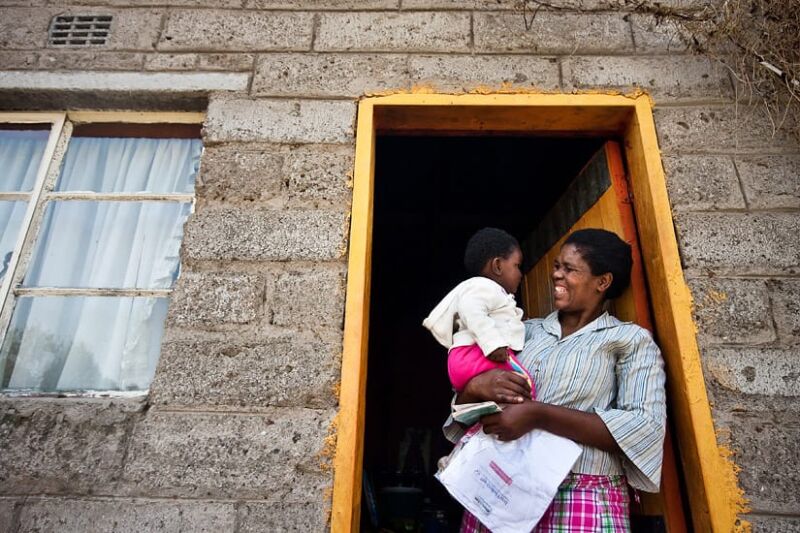
Humanitarian action, as we know it today, is the result of a long historical process. The transformation from the earliest forms of assistance in antiquity to the birth of the Red Cross and International Humanitarian Law in the mid-19th century was the product of the practical need to reduce human suffering in armed conflicts. This, together with the altruism and determination of certain individuals to exert the necessary political pressure, laid the foundations of an organised humanitarian system with international legal backing.
Table of contents:
Historical antecedents of humanitarian action
From ancient Greece and Rome to the 19th century
Throughout the centuries there have always been natural disasters and conflicts. There has also always been altruism, in many different forms and under different justifications, including philosophical and religious ones. Charity has always had a place in the teachings of Christianity and Islam, for example. Even in ancient Greece and the Roman Empire there were limits and rules governing what was considered acceptable or unacceptable in war (Davey et al., 2013).
There are also some references to the notion of humanitarianism in the eighteenth century. Following the Lisbon earthquake of 1755, Immanuel Kant called in his writings for social cohesion in responding to the tragedy and suggested that countries affected by a natural disaster such as an earthquake should halt their wars (Oliver, 2016).
However, there are very few records of more or less organised humanitarian assistance before the 19th century, when communications began to advance rapidly. It was in that century that improvements were made in medical evacuations during the American Civil War, and that Florence Nightingale and her team introduced improvements in the care of wounded British soldiers during the Crimean War.
Those initiatives, however, were focused solely on assisting people of the same nationality, with a very local outlook (Webb, 2002). They were simply based on traditional norms inspired by religion or the values of a group of people, but were completely disregarded when conflict broke out with another nation or with groups of a different religion (Bugnion, 2009).
The colonial origins of international humanitarian action
Beyond local initiatives, the 19th century also saw some examples of international assistance.
For example, the first missionary doctors provided healthcare abroad. However, this care was focused on treating the illnesses of fellow missionaries. In some cases, this healthcare was extended to local indigenous populations, but always as a response to the need to protect colonial workers (Davey et al., 2013).
Likewise, empires such as the British used humanitarian assistance to disasters and famines in some of their colonies. This, however, was not done from a rights-based approach, but primarily to maintain social order and thereby preserve political power. Moreover, some studies speak of the cruelty with which food and economic assistance was provided to the most vulnerable people, erecting physical and sociocultural barriers that limited access for those not considered worthy of receiving it. This was not exceptional at the time. Prominent nineteenth-century economists such as Thomas Malthus and Adam Smith viewed the suffering caused by hunger, conflicts and epidemics as necessary evils for controlling population growth, and state intervention to alleviate hunger as misguided interference (Simonow, 2015).
Until practically the beginning of the nineteenth century, the debate about providing assistance to people in need during emergencies did not focus on how to provide it, but on whether it was truly necessary (Webb, 2002).
The birth of the Red Cross and International Humanitarian Law in 1863
Henry Dunant and the Battle of Solferino
The turning point of this era came in 1859, thanks to the solidarity of the women of an Italian village and the testimony of a Swiss businessman named Henry Dunant.
Dunant witnessed the Battle of Solferino during a business trip, which pitted three hundred thousand soldiers from Swiss and Austro-Hungarian troops against each other, armed with rifles and bayonets and positioned in rows along an eleven-kilometre front. After the battle, the nearby town of Castiglione della Pieve and everything in it that could serve as shelter became an improvised hospital for wounded French and Austrian soldiers.
Dunant witnessed how the local population mobilised as best it could to provide assistance, and helped organise groups of women who distributed bandages, food and water, cleaned wounds and brought comfort to the wounded, regardless of their side or nationality. "All are brothers" became the motto of those women who faced the horror and alleviated the suffering of so many in a spontaneous and selfless manner. Despite their efforts, thousands of soldiers who had survived the battle later died from wounds, infections, hunger and thirst (Dunant, 1862).
From reflection to action: "A Memory of Solferino (1862)"
Dunant realised that altruism and a willingness to help were not enough — collaboration and coordination were also needed. For this reason, in 1861 he withdrew to Geneva to put his reflections into writing in a book entitled "A Memory of Solferino", which he would publish a year later, in 1862 (Dunant, 1862).
In this book Henry Dunant did not limit himself to describing the pain and suffering he had witnessed, or the emotions they stirred in him. He went further and asked a question that would change everything: "Would it not be possible, in times of peace and tranquility, to form relief societies for the purpose of providing care for the wounded in wartime by enthusiastic, dedicated and fully qualified volunteers?" This simple question would be the inspiration for the creation of the Red Cross.
"A Memory of Solferino" was published in a limited edition of 1,600 copies, paid for entirely by Henry Dunant. Beneath the title on the cover, he noted: "not for sale." Dunant did not commercialise it, but instead sent it to political and military leaders, writers and philanthropists (Bugnion, 2009).
The origins of the International Committee of the Red Cross
In 1863, Gustave Moynier, director of the Geneva Public Welfare Society, invited Dunant to participate in a meeting of this local organisation. Despite initial resistance to challenging the principles of military practice in wars, five members of this Society decided to bring Dunant's ideas to a congress in Berlin and agreed to write a joint document to that end.
This small committee was composed of Gustave Moynier, Henry Dunant, General Henri Dufour, and doctors Louis Appia and Théodore Maunoir, both surgeons (Bugnion, 2009). On the day of their first meeting, 17 February 1863, they decided that the committee should be international and permanent. On that very same day, therefore, the International Committee for the Relief of the Wounded in Time of War was constituted. Its primary purpose was to ensure that, in war, wounded or sick soldiers would always receive care, regardless of which side they were on.
The proposal was received in Berlin with enthusiasm. It was not a mere theoretical exercise, but a concrete commitment to ensure that armies would not attack field ambulances or hospitals. At the Battle of Solferino, the nearest hospitals were more than 15 kilometres away, and the main referral hospital more than 100. Moreover, each country marked its ambulances with its own flags and colours, turning them into targets for the enemy, and medical personnel were not clearly identified. Even the civilian population was afraid to tend to the wounded, for fear of being accused of aiding the opposing side.
The proposal of the International Committee was to form permanent relief societies in each country that could establish the necessary contacts with military forces to be ready to respond. It was to be an international network of decentralised societies. When fighting broke out, the societies would place well-trained volunteers at the disposal of commanders to care for the wounded on all sides, without distinction. From the need to identify these individuals with a neutral symbol came the emblem of the red cross on a white background (Bugnion, 2009).
All of this was set out in a framework document of ten articles, presented and approved at a new conference in Geneva in October 1863, attended by 36 people, including representatives from 14 countries. The Societies for the Relief of Wounded Soldiers had been born, which would later become the National Red Cross and Red Crescent Societies.
The origins of International Humanitarian Law
In addition to the question about relief societies, Henry Dunant posed another in his book: "On certain special occasions, as, for example, when princes of the military art belonging to different nationalities meet at Cologne or Châlons, would it not be desirable that they should take advantage of this sort of congress to formulate some international principle, sanctioned by a Convention inviolate in character, which, once agreed upon and ratified, might constitute the basis for societies for the relief of the wounded in the different European countries?" This second question became the seed of International Humanitarian Law.
The five promoters of the future ICRC knew that their entire proposal would lack support without an international legal framework to underpin it. The great powers had to commit to guaranteeing an inviolable principle of protection for all those engaged in caring for war victims. This commitment could not be merely a wish expressed at a conference. It had to be enshrined in a treaty agreed in peacetime, valid for all future conflicts (Bugnion, 2009).
Following the success of the October 1863 conference, the Committee began preparing another diplomatic conference to address this issue. The challenge was now greater. This was no longer a gathering of well-intentioned philanthropists, but of official envoys from countries with clear political interests. The Swiss government agreed to collaborate and sent invitations to all the governments of Europe, the United States, Brazil, and Mexico. The conference took place from 8 to 22 August 1864, and on that last day the Geneva Conventions were signed. Within just four months of signing, ten countries had ratified them.
A new branch of law had been born: International Humanitarian Law, with treaties that would be updated and expanded in future conventions, eventually including, almost 80 years later, the protection of civilians. Dunant received the Nobel Peace Prize in 1901, nine years before his death.
References
- Bugnion, F. (2009). From Solferino to the birth of contemporary international humanitarian law. International Committee of the Red Cross. https://www.icrc.org/sites/default/files/external/doc/en/assets/files/other/solferino-bugnion-icrc.pdf
- Davey, E., Borton, J., & Foley, M. (2013). A history of the humanitarian system: Western origins and foundations (HPG Working Paper). Overseas Development Institute. https://media.odi.org/documents/8439.pdf
- Dunant, H. (1862). A memory of Solferino. International Committee of the Red Cross. https://www.icrc.org/sites/default/files/external/doc/en/assets/files/publications/icrc-002-0361.pdf
- Oliver, K. (2016). A brief history of humanitarianism. In Carceral humanitarianism: Logics of refugee detention (pp. 83–96). University of Minnesota Press. https://manifold.umn.edu/read/carceral-humanitarianism-logics-of-refugee-detention/section/88046489-ed90-4fc9-b754-2b434425d57b
- Simonow, J. (2015). Understanding humanitarian action in South Asia: Responses to famine and displacement in nineteenth and twentieth century India (HPG Working Paper). Overseas Development Institute. https://media.odi.org/documents/9634.pdf
- Webb, P. (2002). Emergency relief during Europe’s famine of 1817 anticipated crisis-response mechanisms of today. The Journal of Nutrition, 132(7), 2092S–2095S. https://doi.org/10.1093/jn/132.7.2092S
- The origins of humanitarian action: from antiquity to the 19th century
- History of humanitarian action in the 20th century
- Rwanda 1994 and modern humanitarianism
- 9/11, the War on Terror and humanitarian action
- Darfur, the Indian Ocean tsunami and the 2005 humanitarian reform
- Haiti, Pakistan and the 2011 Transformative Agenda
- From the Grand Bargain (2016) to the crisis of the humanitarian system (2025)
NotebookLM
You can review my bibliographic references on the origins of humanitarian action with this NotebookLM, an AI-powered research assistant. Do you want to learn more?
How to cite this page
Abarca, B. (June 29, 2026). The origins of humanitarian action: from antiquity to the 19th century. Salud Everywhere. https://saludeverywhere.com/en/humanitarian-aid-and-international-development/the-origins-of-humanitarian-action/